
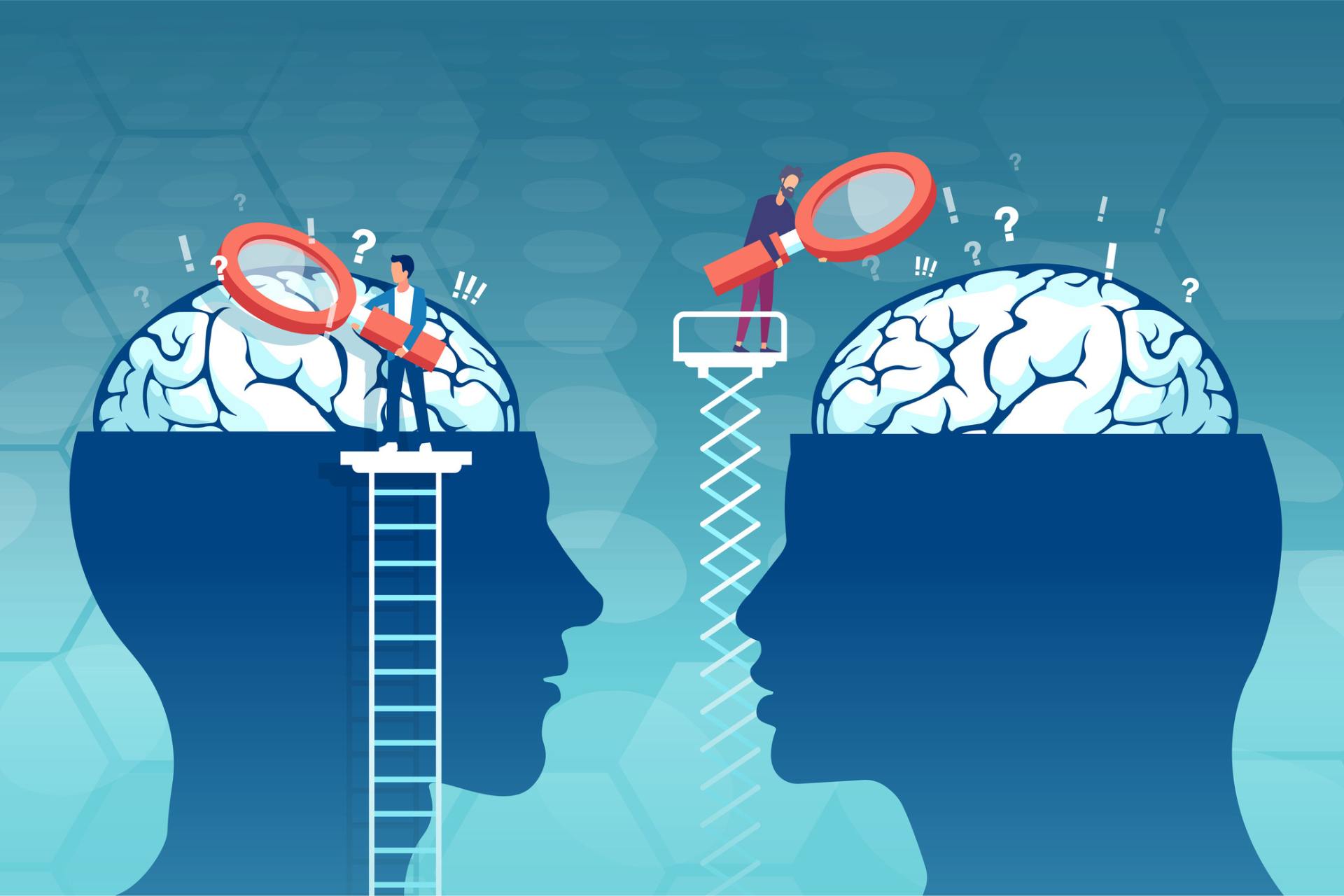
Autism and ADHD have both been noted in the popular press for increases in prevalence over the last number of decades. If you have read about these increases in reputable sources, you will know that the numbers have gone up primarily through more awareness, destigmatization, and changes in diagnostic criteria, rather than environmental causes such as the thoroughly-debunked vaccination theory. However, given that autism especially has been getting increased attention, and ADHD is often misunderstood, I thought it would be helpful to clarify both conditions and their interrelationships. I will be drawing on my experience and study as a neuropsychologist and therapist, having worked with many people on these spectrums.
ADHD and autism are simultaneously over- and under-diagnosed in the general population. While there are lots of reasons, I’ll just offer a couple of examples. One example of overdiagnosis for ADHD is that boys who are the youngest in their school class tend to be over-diagnosed. Being younger, they are less mature than their cohort and in contrast can appear to display ADHD symptoms such as impulsiveness, higher levels of physical activity, and low emotional control. Women and girls tend to be underdiagnosed for both disorders because they exhibit different symptoms, frequently less overt. Similarly, underserved groups tend to be underdiagnosed, although they have gotten more attention in recent years, which also accounts for some of the increase in prevalence numbers.
A common factor in both autism and ADHD, and the primary factor in ADHD, is executive function. Executive function (abbreviated EF) is a somewhat variably defined set of processes that–as the title implies–tend to organize and control a variety of other brain activities. A common analogy is that EF is to the brain as a conductor is to an orchestra.
Some of the core functions that are almost always included in EF are things like impulse control, emotional control, working memory, cognitive flexibility, and the abilities to organize, plan, self-monitor, sustain attention, prioritize and initiate.
ADHD
Let’s start with ADHD, since the current estimated prevalence in both children and adults is somewhere around 3x that of autism. First of all, as many have noted, the “attention deficit” label is very misleading. While it seems to address the fact that ADHD-ers can have trouble sustaining attention for routine or uninteresting tasks, it overlooks the opposite fact that they can often “hyperfocus” on things that engage them, often to the point that it is hard for them to shift away! This would seem paradoxically to be a kind of attention surplus. However it is more likely a kind of cognitive inflexibility. Shifting actually involves two steps: first disengaging from the current object, in order to then be able to turn one’s focus to something else.
Given that most ADHD-ers have challenges with many or all of the elements of EF, it probably would be better termed an executive function disorder or deficit. However, it’s important to keep in mind that different individuals will have differing profiles of strengths and weaknesses in any of those areas. For example, working memory tends to be weak in almost all ADHD-ers, but some may be better or worse at planning, some better or worse at initiating, etc.
More recently in the ADHD and autism communities these characteristics are described as “neurodivergent,” emphasizing that all brains are different, and differences don’t need to be viewed as pathological. One way that challenges arise is that much of “developed” society has emphasized domains such as academic and corporate structures with a high demand for executive functions. Accordingly these environments have not provided an easy home for persons with ADHD and autism.
There are arguments that ADHD, particularly, may have been adaptive in hunter-gatherer societies where sensitivity to inputs such as detection of predators would be a virtue for the group. Although EF differences can leave people vulnerable to being either under- or over-stimulated, tech culture can provide high enough sensory and cognitive stimulation to be helpful, while being bounded in certain ways that make it tolerable. For instance, video games or coding can be very engaging, yet relatively predictable and confined to a screen. Tech culture also offers more relaxed social conventions which can provide a more comfortable environment for both ADHD-ers and autistic folks.
Other potential ADHD strengths as identified by Edward Hallowell, MD include: creativity, curiosity, tenacity, high energy, an entrepreneurial spirit, spontaneity, and an infectious sense of humor.
Executive functions regulate or modulate other brain activities. The primary brain areas associated with EF are the prefrontal lobes which are mostly thought of as exerting inhibitory influence on other brain areas. By the same token, executive functions mostly involve some aspects of inhibition: either stopping or slowing other processes.
For instance, impulse control requires pausing or slowing down in response to an urge. The skill of prioritizing requires dampening the salience of some things in order to make others more prominent. In order to have flexible, available, attention, one has to disengage (inhibit) attention from the current focus to be able to shift to something else.
Many ADHD-ers can have the experience of too many thoughts at once, or their thoughts going too fast, which is another form of not being able to modulate or inhibit. And in a similar vein, distraction, broadly speaking, is a function of not being able to inhibit—or filter out—irrelevant stimuli, whether those be thoughts or sensory inputs.
Research has well established that in people with ADHD, those prefrontal brain areas are paradoxically under-stimulated, which diminishes their ability to exert their inhibitory influences. It’s counter-intuitive that stimulation would lead to inhibition, but that’s why stimulant medications such as Ritalin are helpful for ADHD folks. Those medications increase prefrontal activation, which in turn allows for more EF modulation of other brain areas. It also explains why background music, movement, fidgeting, etc., for example, can be helpful, as they are also stimulating.
The current diagnosis of ADHD is roughly divided into primarily inattentive or primarily hyperactive. Somewhere between 50% to 80% of children have some hyperactivity. While it was thought that many of them grow out of it, it is now estimated that only about 10% may grow out of it completely. The rest have at least some residual above-average activity levels. A better way to understand this elevated level of movement is as a kind of “self-medication,” by way of stimulation. But while hyperactivity is often thought of as emblematic of ADHD, it is only one—relatively minor—characteristic, relative to EF.
Understanding ADHD through the lens of executive functioning—and within a broader neurodiversity framework—helps move us beyond simplistic or stigmatizing narratives toward a more accurate, humane picture of how different brains operate in different contexts. ADHD is not merely about attention, nor is it best understood solely in terms of deficits; it reflects a distinct cognitive profile shaped by differences in inhibition, regulation, and stimulation, with real challenges but also meaningful strengths. By clarifying these dynamics, we can better support individuals, partners, families, and systems in creating environments that fit a wider range of minds. In the next part of this blog series, I’ll turn to autism, taking a closer look at its core features, how it overlaps with ADHD, and where it meaningfully differs.
If some of what you have read sounds familiar and you want help navigating these differences, reach out – we can help!

Robert believes the keystone to successful relationships is being able to know your own thoughts, feelings and behavior at multiple levels, while also being able to understand, empathize with and reflect your partner’s thoughts, feelings, and behavior. In this way he helps you “attune” to each other and begin to heal the emotional stumbling blocks that are keeping you stuck or disconnected as a couple.