
When couples hit a disagreement, most don’t realize they’re falling into one of two predictable patterns.
The first is: “I’m right, you’re wrong.”
In this mode, the goal becomes winning. You might:
- invalidate your partner’s feelings
- dismiss their perspective
- minimize what they’re saying
- poke holes in their logic
It can feel justified in the moment—after all, you believe you’re right. But the cost is high.
There’s no real room for your partner.
And when someone doesn’t feel seen or understood, they don’t move closer—they pull away.
The second pattern is the opposite: “I’ll just go along.”
Here, the goal is to avoid conflict. You might:
- stay quiet
- agree when you don’t actually agree
- soften or abandon your truth
- tell yourself, “It’s not worth it”
This can look like peace on the surface. But underneath, something else is happening.
There’s no real room for you.
Over time, that leads to resentment, disconnection, and a quiet sense of losing yourself in the relationship.
Here’s the problem: neither pattern actually resolves anything.
When couples try to talk through a difference using either of these approaches, the conversation eventually goes off the rails—or off the table entirely.
The issue:
- doesn’t get fully expressed
- doesn’t get fully heard
- doesn’t go anywhere
So it lingers.
And over time, those unresolved moments start to stack up.
This is when couples begin to say things like:
- “We feel stuck.”
- “We’re just going through the motions.”
- “We’re good parents, we run the house… but we feel like roommates.”
Because the truth is:
Healthy relationships are built on the ability to hold two perspectives at the same time:
- yours
- and your partner’s
Without collapsing into one or overpowering the other.
If your conversations keep going nowhere, it’s not because the topic is too big.
It’s because the approach isn’t making room for both people.
And that’s where real change begins.
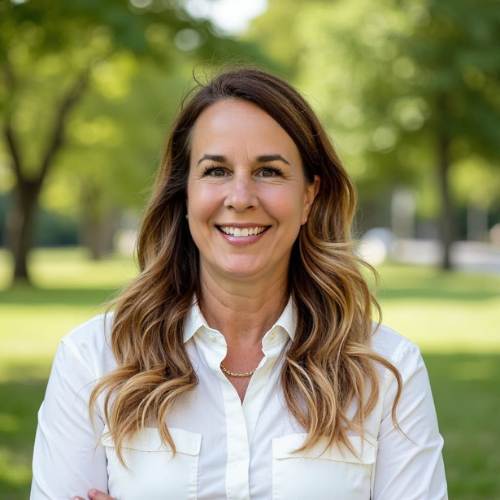
Michelle Joy is a senior therapist at The Couples Institute and a leading expert in the Developmental Model of Couples Therapy. Since 2002, she has specialized in helping couples transform deep-seated patterns through a blend of neuroscience, differentiation, and her expertise as a certified Enneagram teacher.
In addition to providing couples therapy and intensives, Michelle leads workshops for every stage of relationship—from “Marriage Prep 101” to long-term communication skills. A prominent speaker and trainer for organizations like PESI and CAMFT, she provides professional consultations and advanced classes for therapists worldwide.